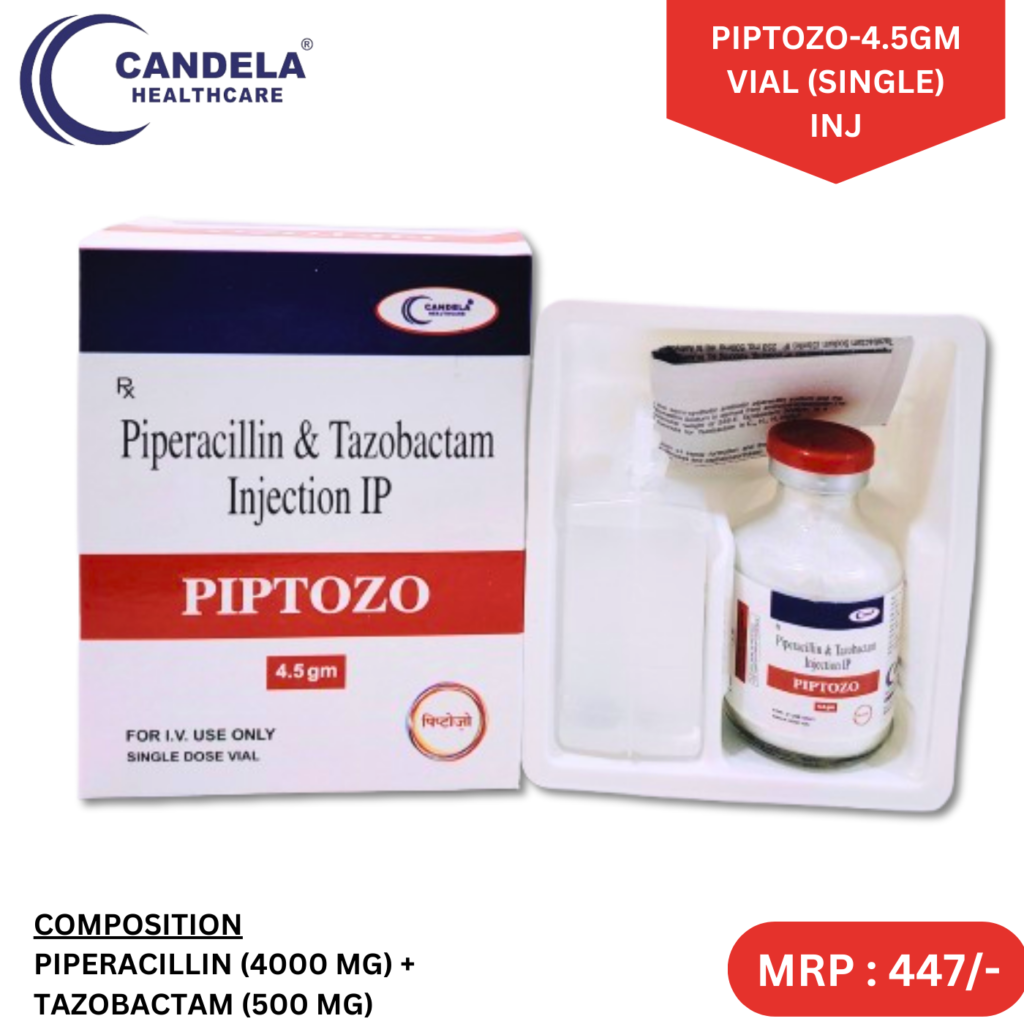
PIPTOZO-4.5:
Piperacillin (4000 mg) + Tazobactam (500 mg) is a combination antibiotic medication used to treat a wide variety of bacterial infections. It is often referred to by the brand names Piptozo or Candela and is commonly used in a hospital setting, particularly for serious infections.
What is it?
- Piperacillin: This is a broad-spectrum penicillin-type antibiotic that fights bacteria.
- Tazobactam: This is a β-lactamase inhibitor, which helps prevent bacteria from breaking down piperacillin. Bacteria produce enzymes (β-lactamases) that can inactivate certain antibiotics like piperacillin. Tazobactam prevents this, allowing piperacillin to work more effectively.
Uses:
Piperacillin + Tazobactam is used to treat a wide variety of serious bacterial infections, including:
- Pneumonia (hospital-acquired or ventilator-associated)
- Urinary tract infections (UTIs)
- Intra-abdominal infections (e.g., appendicitis, peritonitis)
- Skin and soft tissue infections
- Pelvic inflammatory disease (PID)
- Sepsis (bloodstream infection)
- Complicated diabetic foot infections
- Bone and joint infections
It works well against anaerobic, gram-positive, and gram-negative bacteria.
Dosage:
The dosage and length of treatment vary based on the infection being treated, patient factors (such as kidney function), and the severity of the infection. It’s most commonly given as an intravenous (IV) infusion in the hospital.
Typical dosing schedule:
- Adults:
- For most infections: 3.375 g (Piperacillin 3,000 mg + Tazobactam 375 mg) every 6 hours
- For severe infections like hospital-acquired pneumonia: 4.5 g (Piperacillin 4,000 mg + Tazobactam 500 mg) every 6 hours
- Renal impairment: Doses may be reduced based on kidney function.
How to take it:
- Administration: Typically given by a healthcare provider in a hospital through an IV drip over 30 minutes to 1 hour.
- Not available as a pill: It is not administered orally but only as an injection or IV infusion.
Side Effects:
As with any antibiotic, there can be side effects, ranging from mild to serious.
Common side effects:
- Nausea, vomiting, diarrhea
- Rash or itching
- Headache
- Constipation
Serious side effects:
- Allergic reactions: Rash, hives, difficulty breathing (especially in patients with a penicillin allergy)
- Clostridium difficile-associated diarrhea (C. diff): A severe infection causing persistent diarrhea, which may require medical attention
- Liver problems: Elevated liver enzymes, jaundice
- Kidney issues: Reduced kidney function, especially in those with pre-existing kidney disease
- Low blood counts: Reduced levels of white blood cells, red blood cells, or platelets
Precautions: When to Avoid
- Allergy: If you have a known allergy to penicillins, cephalosporins, or beta-lactam antibiotics, avoid this medication.
- Kidney disease: Patients with severe renal impairment require adjusted dosing.
- Pregnant or Nursing: Before using, speak with a healthcare professional if you are pregnant or nursing.
- Drug interactions: Piperacillin + Tazobactam may interact with blood thinners (like warfarin) and other medications that affect the kidneys. Any medications you are taking should always be disclosed to your doctor.
Conclusion
Piperacillin + Tazobactam is a potent combination used to treat serious bacterial infections. It is highly effective but should only be used under medical supervision, typically in a hospital setting. It’s important to complete the full course of antibiotics as prescribed to avoid bacterial resistance.